Tourism First Impressions: Mon Forest Towns, WV
Overview

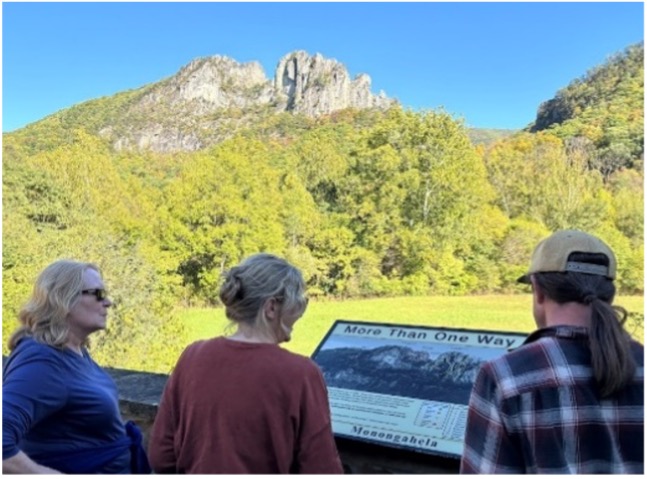
The Tourism First Impressions (TFI) program creates an exchange between people from two (or more) destination regions. A visitor group provides feedback to representatives from the host region regarding perceptions of tourism strengths and opportunities. In early October of 2024, a team of four professionals from New Hampshire spent 4 days/3 nights touring a variety of communities in and near the Monongahela National Forest region of West Virginia.
Itinerary
Day 1: Reagan Airport (VA) to Davis
Day 2: Davis, Thomas, Elkins, Marlinton, Snowshoe
Day 3: Snowshoe, Cass, Green Bank, Seneca Rocks, Petersburg
South Side Depot, Petersburg
Day 4: Petersburg to Reagan Airport
Visitor Group Member Profile and Key Impressions
| Gender | Age Range | Bio/Background | Key Impressions |
|---|---|---|---|
| F | 28-43 | UNH Extension specialist focused on tourism, outdoor recreation, and economic development. Lives in a small, seasonal tourism destination city. Enjoys the outdoors, food, arts, and culture. | Near D.C. and offering a variety of outdoor recreation and historical attractions, this seems like an appealing destination for families, multi-generational groups, or young professionals looking to get away from the city for a long weekend. Town’s visitor amenities (lodging, dining, shopping) can be sparse, or have limited hours. |
| F | 44-59 | UNH Extension specialist with experience in community development, arts, history, cultural heritage tourism, and the outdoors. Lives in a small, rural community. | Quaint, friendly communities, each with their own unique feel. Year-round outdoor recreational amenities for those seeking quiet or adventure provide opportunities to increase year-round visitation. Growth of creative and cultural experiences could attract travelers, convince them to stay an extra day, or return for future visits. |
| M | 44-59 | UNH Extension program team leader focused on economic development. Lives in medium-sized town known for its historic, riverside downtown and access to recreational amenities like mountain biking, public parks, and river recreation. | Excellent, uncrowded outdoor recreation opportunities (skiing, mountain biking, fly fishing, rock climbing). Charming towns have unique histories and attractions, with room to grow businesses serving outdoor enthusiasts. Infrastructure improvements (sidewalks, signage, lighting) could enhance the visitor experience. Proximity to D.C., Pittsburgh, and Baltimore positions the region well for sustainable tourism growth. |
| F | 44-59 | Director of regional chamber association in NH engaged with tourism and destination marketing. Lives in a small, rural community. | The region is strong in terms of outdoor amenities. There are opportunities to further develop indoor, arts, and cultural attractions. Since visitors seek well-rounded destinations, business and organizational partnerships may help the region expand and promote its offerings. |
Findings and Feedback from the Destination Assessments

Overall Impressions of the Region:
- Outdoor recreation (especially biking, hiking, and skiing) stands out as the main draw to the region, especially given the National Forest’s proximity to the Metro DC area.
- The Mon Forest landscapes provide a pleasing setting for road trips and exploration, even for visitors coming from a similarly scenic, rural region.
- The region maintains an enjoyable “off-the-beaten-path” feel that has become increasingly hard to find in many popular destination regions.
- The region seems like an affordable destination and generally very welcoming to visitors.
Key Findings:
- The collective identity and branding of the Mon Forest Towns creates nice connectivity for visitors as they travel through the region. This branding feels fun, outdoorsy, and connected to nature. It’s impressive to see so many communities of different sizes working together toward a shared vision for tourism and recreation.
- Amenities like visitor centers, interpretive signage, self-guided history tours, parks, and pavilions create the impression of communities that have local pride and welcome visitors.
- While natural and historical features are abundant throughout the region, many towns have very limited (if any) businesses that support visitors, such as lodging, dining, coffee shops, bars, breweries, and gift shops. This could impact visitors’ word of mouth or likeliness to return.
- Limited business hours and seasonality may present obstacles for some visitors or prevent visitors from having the full destination experience.
- There are opportunities to further enhance downtown/Main Street districts for improved accessibility and visitor appeal. Factors such as sidewalk conditions, landscaping, parks, signage, art, and creative placemaking can make a big difference in whether visitors stop or just pass by.

Recommendations and Next Steps
- Continue to work collectively across municipalities as a destination region, sharing challenges, successes, opportunities, and best practices. Most visitors will pass through many different towns. Leverage this opportunity for cross-promotion.
- Create targeted marketing to the DC Metro area (e.g., weekend getaway campaign). Consider how organizational partnerships can create new marketing opportunities.
- Maintain the sense of authenticity and timeless charm that make you special. Focus on communicating your assets and delivering top-quality service, but don’t feel too pressured to replicate the trending amenities seen in other places.
- Strengthen existing tourism businesses through engagement in destination development initiatives, workforce development strategies, educational support, and cross-promotional opportunities. Investigate ways businesses may be able to expand operating hours and seasons.
- Think beyond outdoor recreation. Highlight and enhance businesses and organizations pertaining to arts, culture, and heritage that provide interesting activities. This can help build destination appeal with families, multi-generational groups, and older visitors, while providing a broader range of rainy-day and year-round activities.
- Make trip planning and navigation easy for visitors. Expand Wi-Fi and cell coverage (where possible) and ensure that businesses have up-to-date listings in Google Maps, Yelp, TripAdvisor, and regional tourism websites. Keep up the good progress in creating and installing interpretive and directional signage.

Additional Observations
Some quotes from the authors provide additional context:
- “Helpful visitor centers were everywhere!”
- “There is a lack of awareness about West Virginia in audiences outside the state, which reduces its competitiveness. But it should be competitive for its authenticity and what the region does have to offer.”
- “The assets are there, but could be interpreted, preserved, and leveraged more.”
- “Wi-fi and particularly cell service need work. That is how people find you…from their phone and apps like Yelp, Google Maps, etc.”
About this report
Report date: April 2025
Prepared by: Jada Lindblom, Rebecca Levy, Charlie French, Tracy Hutchins, and Doug Arbogast.
This report is part of a larger project between West Virginia University, Penn State University, University of Vermont, University of New Hampshire, and the Northeast Regional Center for Rural Development. Funding sources include USDA AFRI (2022‑68006‑3645), USDA McIntire Stennis Program (WVA00803), USDA Hatch Program (TEX0‑8077), USDA Multistate Hatch Project (NE2251) and USDA NIFA (2021–51150–34733).