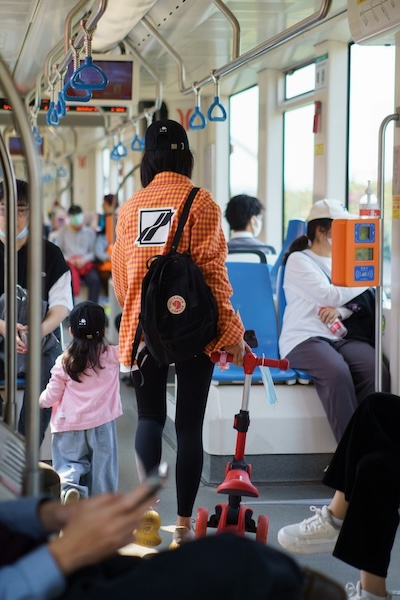
NERCRD is convening Extension educators, specialists, and professionals for a regional online meeting focused on grandparents raising grandchildren. The meeting will take place on Tuesday, February 10, 2026 at 2:00 p.m. ET.
Webinar Recording: Healthy Grandfamilies and Kinship Care
October 23, 2025
November 18th at 2:00 p.m. ET — Join us to hear how the WVSU Healthy Grandfamilies program educates, supports, and empowers grandparents raising their grandchildren, particularly in rural West Virginia communities. This one-hour webinar will highlight the Healthy Grandfamilies program, the Caring for Our Kin curriculum designed by Penn State and WVU Extension, and real-world insights from a county coordinator who is making a lasting impact on families.
New research brief examines rural-suburban-urban differences among Northeast caregivers
June 24, 2025
The latest publication in NERCRD’s caregiving research brief series describes the caregiving experience for rural, suburban, and urban caregivers in the Northeast region of the U.S., as reported by households as part of the “NER-Stat: Caregiving Survey.”
Rural-Surburban-Urban Differences in Caregiving in the Northeast U.S. Region
June 1, 2025
Introduction
This “Research Snapshot” describes similarities and differences in the caregiving experience of rural, suburban, and urban caregivers in the Northeast region of the U.S., as reported by households as part of the “NER-Stat: Caregiving Survey” — a regional household survey that the North Central Regional Center for Rural Development (NCRCRD) conducted in collaboration with Northeast Regional Center for Rural Development (NERCRD), The Ohio State University and the National Farm Medicine Center. The survey was conducted in 2023 with 4,480 responses from the 13 states of the Northeast Region through a Qualtrics online panel. The dataset that this brief draws upon is also available online here: https://purr.purdue.edu/publications/4491/1
Variations in social and physical infrastructures across the rural-urban interface shape caregivers’ experiences and access to resources. In this brief, we describe the caregiving experience for rural, suburban, and urban caregivers in the Northeast region of the U.S., as reported via a regional household survey conducted in 2023. Urban caregivers were generally younger and more likely to take care of children. Likely as a result, they reported having the most financial struggles and the greatest desire for supports (i.e., financial, educational and other resources). However, rural and suburban caregivers also reported facing significant burdens and wanting more support. In particular, caregivers recommended greater support for childcare, policies to encourage workforce participation, and financial and in-kind assistance. The following provides greater detail.
Caregiving in the Northeast
Caregiving is a common occurance in most peoples’ lives. Most respondents (81%) have provided care at some point in the past. Over half of respondents (59%) provided care in the past 12 months (Figure 1).
Figure 1. Who provided care in the past 12 months? Enlarge Figure 1.
Rural caregivers were less likely to have provided care in the past 12 months (54%).
A larger share of urban caregivers (63%) had provided care in the past 12 months.
These findings may be related to the age structure of rural, suburban, and urban caregivers, which we describe in greater detail below.
For the remainder of the brief, we focus on respondents who provided care in the past 12 months.
Across the rural-urban interface, women were the majority of caregivers in the Northeast: about twice as many were women (63%) as were men (37%).
Over half (55%) of caregivers were in their prime working ages (i.e., 25-49), while 20% were ages 50-64, 11% were 65 or older, and 14% were 18-24 years old (Figure 2).
Regarding age structure along the rural-urban interface:
Rural caregivers tended to be older, with almost half (46%) being 50 years or older.
Urban caregivers tended to be younger, with the vast majority (81%) being less than 50 years old.
Figure 2. Age profile of caregivers in Northeast. Enlarge Figure 2.
Respondents were split relatively evenly between caring for just children, just adults, or both children and adults.
Rural caregivers were less likely to care for both children and adults (27%) than the overall sample.
Urban caregivers were more likely to care for both children and adults (43%) than the overall sample.
One-fourth (25%) of respondents had a high-income household, while 36% had a middle-income and 39% had a low-income household (Figure 3).
Rural caregivers were the least affluent, with 18% making over $100,000.
Suburban caregivers were the most affluent, with 29% making over $100,000.
Figure 3. Income profile of caregivers in the Northeast. Enlarge Figure 3.
Most respondents in the Northeast were White (47%), followed by Hispanic (27%) and non-Hispanic people of color (POC) (26%) (Figure 4).
Rural caregivers were by far the least diverse, with 71% being non-Hispanic white.
Urban caregivers were the most diverse, with each group comprising about one-third of the population.
Figure 4. Racial-ethnic profile of Northeast caregivers. Enlarge Figure 4.
Providing care is a multifaceted effort
Caregiving takes time. Many caregivers spend more than 20 hours per week on either child- or adult care (35% and 26%, respectively).
Rural caregivers were more likely to do around-the-clock adult care (13%) than the overall sample (9%).
Some caregivers commute to provide adult care. Although one-third (36%) of caregivers lived with their adult care recipient, 20% lived over an hour away. These adult recipients lived primarily in their own home (68%).
Urban caregivers were simultaneously less likely to co-reside with the adult care recipient (32%) and more likely to live over an hour away (24%).
Nearly three-quarters (71%) of both rural and urban caregivers of adults provide care in that adult’s own home, while only 62% of suburban caregivers do the same.
Many caregivers rely on paid services to help with care responsibilities. Almost three-quarters of caregivers (72%) had out-of-pocket care-related expenses in the last 12 months, with over nearly half (44%) of respondents spending more than $200 each week (Figure 5).
Urban caregivers reported paying more for child- and adult care than did other caregivers. They were more likely to pay over $200 weekly for childcare than were other caregivers (53% vs. 44%).
Caregiving can be financially difficult. Over half of caregivers (55%) reported that they had experienced financial difficulties because of caregiving (Figure 6). Of this subset, over one-third (38%) experienced three or more of the difficulties listed. The most common difficulties experienced were taking on more debt (41%), missing or being late paying a bill (38%), and borrowing money from family and friends (31%).
While urban caregivers were significantly more likely (60%) to report experiencing financial difficulties, a large portion of rural and suburban caregivers (47% and 55%, respectively) reported experiencing financial difficulties.
Among those who experienced difficulties, rural caregivers were likelier to experience a greater number of challenges, with 42% reporting at least three different types of financial difficulties.
Figure 6. Experience of financial difficulties. Enlarge Figure 6.
Over one-third (37%) of caregivers reported that they had made changes to their employment because of caregiving.
Suburban and urban caregivers were significantly more likely to have made changes to their employment (39%).
Care options in the community
Respondents were asked about their satisfaction with the availability, hours, cost, quality, transportation to care, and care recipient-specific options (i.e., summer camp and school), of care options in their community. Nearly one-third (29%) of caregivers reported being unsatisfied with the childcare options in their community, while one-quarter (24%) were unsatisfied with local adult care options. However, there were no differences across the rural-urban interface.
Respondents often relied on multiple care options. For childcare, over half of respondents (59%) relied on in-home care by the primary parent, family members or friends, or a babysitter or other childcare provider. A similar number (57%) used out-of-home options such as bringing their child to work, the home of family members, friends or a sitter, licensed childcare providers or pre-Ks, school, before/after school programs, or summer camps/school.
Urban caregivers were far more likely to rely on in-home care (67%) or out-of-home care (62%) than other caregivers. Over half of suburban caregivers relied on in-home care (55%) or out-of-home care (55%). Nearly half of rural caregivers relied on in-home care (50%) or out-of-home care (48%).
Solutions and support
Caregivers rely on many sources of support, but also desire additional supports. Supports can include financial, educational, or other resources.
Caregivers often rely on help from social safety net programs. In the last 12 months, which covered the 2022-2023 period, nearly two-thirds (64%) of caregivers used such programs, which include COVID-19 stimulus checks, Supplemental Nutrition Assistance Program (SNAP), Medicaid, community support, Special Supplemental Nutrition Program for Women, Infants, and Children (WIC), Children’s Health Insurance Program (CHIP), and Temporary Assistance for Needy Families (TANF; Figure 7).
Urban caregivers relied more heavily on such supports than did the general sample, with 73% using safety net supports.
Use of social safety net supports is still quite high, however, among suburban (60%) and rural (56%) caregivers.
Figure 7. Caregivers’ use of social safety net programs. Enlarge Figure 7.
Most caregivers, or a member of their household, have medical insurance: only 6% do not. Most people receive insurance through their employer (36%) followed by Medicare (28%) or Medicaid/CHIP (26%).
Urban caregivers were more likely to lack medical insurance than other caregivers, at 8% uninsured. They were also more likely to have Medicaid or CHIP (31%).
Suburban caregivers were more likely to get their insurance through their employer (36%).
Rural caregivers were more likely to receive insurance through Medicare (35%)
Caregivers also reported wanting more resources and support. Although over three-quarters (78%) reported using caregiving-specific or social safety net supports, many still faced a shortage. Many caregivers reported requesting info for financial help for caregiving expenses (41%) or for help carrying out caregiving duties (35%), using respite services (25%), relying on help from family, friends, and community members (36%), and paying for transportation services (28%).
Caregivers stated that certain benefits would help them be able to enter or return to the workforce (Figure 8). Among these options, around half (52%) of caregivers stated that flexible work hours or the option to telecommute or work from home would help them, while 51% wanted information, referrals, counseling, or an employee assistance program.
Urban and suburban caregivers were more likely (42% and 39%) than the overall sample (37%) to desire paid leave to be able to enter or return to the workforce.
Figure 8. Desired supports to participate in the workforce. Enlarge Figure 8.
Caregivers expressed interest in additional supports for childcare, such as more affordable childcare options, including those that match their work schedule or before/after school programs or summer camps.
58% of urban caregivers responded that more affordable childcare options would be helpful, compared to 50% of all respondents.
Across a range of questions, urban caregivers were consistently more likely than other caregivers to respond that supports for childcare would be helpful, with 70% reporting that financial support for respite care for special needs children would be helpful. Notably, 64% of all caregivers also reported that childcare supports would be helpful.
About this research
Suggested citation
Pojman, E., and Becot, F. (2025, June 16). Rural-Suburban-Urban Differences in Caregiving in the Northeast U.S. Region. Research Brief. Northeast Regional Center for Rural Development. doi:10.22004/ag.econ.358892.
The survey was conducted in 2023 with 4,480 responses from the 13 states of the Northeast Region through a Qualtrics online panel and with the use of nested quota sampling to improve representation of certain household types. These quotas were: 62% family and 38% nonfamily, maximum 60% female and minimum 40% male, 70% urban and 30% rural, and minimum 1% American Indian and Alaska Native, 5% Asian, 13% Black or African American, 69% White, and 11% Hispanic or Latino households. NER-Stat: Caregiving Survey is the regional household survey that the North Central Regional Center for Rural Development (NCRCRD) conducted in collaboration with Northeast Regional Center for Rural Development (NERCRD), The Ohio State University and the National Farm Medicine Center. NCRCRD has also previously conducted the NCR-Stat: Caregiving survey in the North Central Region. The technical documentation, survey codebook, and the open access dataset are available for download here: Inwood, S.; Bednarik, Z.; Becot, F.; Caldera, S.; Henning-Smith, C.; Cohen, S.; Finders, J.; Brown, L. (2024). Northeast Region Household Data. NER-Stat: Caregiving Survey. Purdue University Research Repository. doi:10.4231/TP7N-8B10.
Funding Acknowledgement
This research was supported in part by the USDA National Institute of Food and Agriculture and Hatch Appropriations under Project #PEN05040 and Accession #7008885 and the Nationwide Insurance Endowment in the Pennsylvania State University College of Agricultural Sciences. The research was also supported by the NERCRD which is supported by the U.S. Department of Agriculture’s National Institute of Food and Agriculture (USDA NIFA, project #2022-51150-38139), the Hatch/Multi-State Appropriations under Project #PEN04802 and Accession #7003365, the Northeastern Regional Association of State Agricultural Experiment Station Directors, and the Pennsylvania State University, College of Agricultural Sciences. Any opinions are solely those of the authors. Any opinions, findings, conclusions, or recommendations expressed in this publication are those of the author(s) and should not be construed to represent any official USDA or U.S. Government determination or policy.
The Complex Picture of Caregivers’ Health and Well-Being in the Northeast Region
October 17, 2024
Introduction
This “Research Snapshot” explores the health and well-being of caregivers in the Northeast Region, as reported by households as part of the “NER-Stat: Caregiving Survey” — a regional household survey that the North Central Regional Center for Rural Development (NCRCRD) conducted in collaboration with Northeast Regional Center for Rural Development (NERCRD), The Ohio State University and the National Farm Medicine Center. The survey was conducted in 2023 with 4,480 responses from the 13 states of the Northeast Region through a Qualtrics online panel. Since the caregiving needs of children and adults vary, the researchers explored variations on supports used based on the type of care provided. The dataset that this brief draws upon is also available online here: https://purr.purdue.edu/publications/4491/1
Caregiving can be both a source of joy and stress for caregivers due to the lived realities of care provision and financial implications. In this brief, we explore the emotional and financial well-being of caregivers and assess differences across type of caregiving provided, gender, race-ethnicity, household income level, and geographic location.1 Overall, we find that caregiving has complex effects on caregivers. Many report that their caregiving is valued, and they enjoy caregiving. At the same time, the care they provide often comes at a cost to themselves and their households, ranging from negative effects on health and well-being to financial challenges. Caregiving had a more negative impact on caregivers of adults, caregivers of adults and children, women, people of color, low-income, and rural caregivers. The following provides greater detailsß.
Caregivers’ Health and Well-Being
Three quarters of caregivers (76%) rated their health as “good” or higher. When asked about their happiness on a 0–10 scale where 10 is “extremely happy,” caregivers rated their happiness on average at 6.97.
Providing care can take a toll on caregivers. One-quarter of caregivers reported that caregiving worsened their mental or emotional health (26%) and social life (28%) while under one-fifth (14%) reported it worsened their physical health (Figure 1). Over half of caregivers responded that caregiving had no effect on their physical health (65%), mental or emotional health (51%), or social life (54%). Less than a quarter of caregivers reported that caregiving improved their physical health (20%), mental or emotional health (23%), or social life (18%).
Figure 1. Effects of caregiving on health and well-being. Enlarge Figure 1.
Caregiving had different effects on health and well-being across caregiver characteristics. Groups more likely to report that caregiving made their health and well-being worse included: caregivers of adults (both with and without children), as well as women, white, low-income, and non-urban caregivers. More specifically:
While 14% of all caregivers reported that caregiving worsened their physical health, this proportion was higher for caregivers of adults and children (15%) and adults (20%; versus caregivers of children, 10%), women (16%; compared to men, 12%), non-Hispanic white (15%) and Hispanic (16%; compared to non-Hispanic people of color, though differences were not statistically significant), low-income (17%; compared to high-income, 10%), rural (16%) and suburban (17%; versus urban, 11%) caregivers.
Though 26% of all caregivers reported that caregiving made their mental and/or emotional health worse, this was more pronounced among caregivers of adults and children (28%) and adults only (34%; versus 19% of respondents caring for children), women (29%; versus 21% of men), white (29%; compared to 23% of Hispanic and 24% of non-Hispanic people of color), low-income (28%; versus 22% of high-income), rural (28%), and suburban (30%; compared to 21% of urban) caregivers.
Finally, 28% of all caregivers reported that caregiving had worsened their social life, but it was worse for some groups: caregivers of adults and children (30%) and of adults only (31%; versus 23% of caregivers of children), women (30%; versus 23% of men), white (30%; versus 28% of Hispanic and 24% of non-Hispanic people of color), middle-income (31%; versus 23% of high-income), rural (31%), and suburban (30%; versus 24% of urban) caregivers.
Caregivers experienced a range of feelings about the care they provide. Generally, these feelings were positive: caregivers agreed their caregiving is valued (66%), they enjoy caregiving (62%), they had a choice to become a caregiver (57%), and they feel supported as caregivers (55%) (Figure 2).
Feelings toward caregiving varied across caregiver characteristics. Groups less likely to have positive feelings toward care included: caregivers of adults, women, people of color, low-income, and non-urban caregivers.
Two-thirds of all caregivers (66%) reported they felt their caregiving was valued. Women (64%; versus 70% of men), Hispanic (60%; versus 70% of white) and non-Hispanic people of color (65%), and low-income (63%; versus 71% of high-income) caregivers were less likely to feel valued. There were no differences by type of caregiving provided or rurality.
Two-thirds of all caregivers (62%) reported that they enjoy caregiving, but this proportion was lower among caregivers of adults (54%; compared to 69% of caregivers of children and 64% of caregivers of both adults and children), women (61%), Hispanic (57%; compared to 65% of white) and non-Hispanic people of color (61%), and suburban (58%; versus 64% of urban) caregivers. There were no differences across income level.
Three-fifths of all respondents (57%) reported feeling that they had a choice to become a caregiver. Yet, the following groups were less likely to report they had a choice: caregivers of adults (48%; versus 62% of caregivers of children and 60% of caregivers of both), women (55%; versus 61% of men), Hispanic (55%), low-income (55%; versus high-income, 64%), and rural and suburban (54%; versus 61% of urban) caregivers.
One-half of all respondents (55%) reported that they felt supported in their caregiving role, but this proportion was lower among caregivers of adults (50%; compared to 59% of caregivers of children and 56% of caregivers of both), women (51%; versus 62% of men), Hispanic (51%), low-income (52%; versus 61% of high-income), and suburban (49%; versus 59% of urban) caregivers.
The Financial Cost of Caregiving
Caregiving often imposes a financial burden on those providing care. Over half of all caregivers (55%) reported experiencing financial difficulties due to providing or coordinating care, and over one-third of this group (38%) experienced three or more financial difficulties. The three most common difficulties were taking on debt (41%), missing or being late paying a bill (38%), and borrowing money (31%) (Figure 3).
Figure 3. Financial difficulties experienced by caregivers. Enlarge Figure 3.
The financial burden of caregiving varied across caregiver characteristic. Such burdens were somewhat common, but some groups of caregivers experienced more difficulties: caregivers of children and adults, and Hispanic and urban caregivers.
While half of caregivers (55%) reported financial difficulties due to caregiving, this proportion was higher for caregivers of children and adults (64%; versus caregivers of children, 49%, and caregivers of adults, 52%), Hispanic (65%, compared to 48% of white) and other people of color (58%), and urban (60%; versus 47% of rural) caregivers. There were no differences by gender or income level.
Notably, caregivers of children and adults were often the most likely to report financial difficulties due to caregiving. For example, 43% reported having to take on more debt compared to 41% of all caregivers, while 39% reported missing a bill, compared to 38% of all caregivers.
Caregiving obligations often spilled over onto the paid work responsibilities of caregivers. One-third (37%) of caregivers reported that they had made changes to their employment because of caregiving. Of this group, almost half reduced their work hours or stopped working (42%), while one-third increased their hours or started working (33%) or switched jobs (22%) (Figure 4).
Figure 4. Effects of caregiving on employment. Enlarge Figure 4.
The impact of caregiving on caregivers’ paid work responsibilities was uneven. Some groups were more likely to make changes to their employment due to caregiving: caregivers of children and adults (46%; compared to 29% of caregivers of children and 34% of caregivers of adults), Hispanic (48%) and other caregivers of color (38%; compared to 29% of white caregivers), and suburban (39%) and urban (40%; versus 29% of rural) caregivers. There were no gender- or income-based differences.
Caregiving responsibilities affected caregivers’ ability to perform paid work. Almost half (48%) of all caregivers reported caregiving affects their ability to perform paid work “sometimes,” “often,” or “always” (Figure 5).
Figure 5. Frequency of caregiving affecting paid work. Enlarge Figure 5.
Caregiving affected the ability of some caregivers to perform paid work “sometimes” or more frequently. These groups were: caregivers of children and adults (56%; compared to 43% of caregivers of children and 42% of caregivers of adults), Hispanic (56%; compared to non-Hispanic white, 43%, and non-Hispanic caregivers of color, 45%), high-income (51%), and urban (50%; compared to 45% of rural) caregivers. There were no gender-based differences.
Finally, among those who reported leaving their job to be able to provide care, one-fourth (25%) expected they would be unable to return to the workforce in the future. Over one-third of caregivers of adults (35%) reported the same, compared to 17% of caregivers of both children and adults. Similarly, rural (38%) caregivers were more likely than urban (18%) caregivers to report the same. It is notable that there were no differences across caregiver gender, race-ethnicity, or income level.
Type of caregiving provided means caring for children only, caring for adults only, or caring for both children and adults. Gender captures men and women. Race-ethnicity captures non-Hispanic white, Hispanic, and non-Hispanic people of color. Household income level captures low-income (less than $50,000, between $50,000 and $100,000, or more than $100,000). Geographic location measures a self-report of living in a rural, suburban, or urban area. We report comparisons that are statistically significant at the p<0.05 level. ↩︎
About this research
Suggested citation
Pojman, E., Becot, F., Inwood, S. (2024, October 18). The Complex Picture of Caregivers’ Health and Well-Being in the Northeast Region. Research Brief. Northeast Regional Center for Rural Development. doi: 10.22004/ag.econ.347372.
Authors
Elena Pojman, Penn State, emp5761@psu.edu; Florence Becot, Penn State, florence.becot@psu.edu Shoshanah Inwood, The Ohio State University, inwood.2@osu.edu.
Methods and dataset
The survey was conducted in 2023 with 4,480 responses from the 13 states of the Northeast Region through a Qualtrics online panel. NER-Stat: Caregiving Survey is the regional household survey that the North Central Regional Center for Rural Development (NCRCRD) conducted in collaboration with Northeast Regional Center for Rural Development (NERCRD), The Ohio State University and the National Farm Medicine Center. NCRCRD has also previously conducted the NCR-Stat: Caregiving survey in the North Central Region. The technical documentation, survey codebook, and the open access dataset are available for download here: Inwood, S.; Bednarik, Z.; Becot, F.; Caldera, S.; Henning-Smith, C.; Cohen, S.; Finders, J.; Brown, L. (2024). Northeast Region Household Data. NER-Stat: Caregiving Survey. Purdue University Research Repository. doi:10.4231/TP7N-8B10.
Funding Acknowledgement
This research was supported in part by the Northeast Regional Center for Rural Development and the North Central Regional Center for Rural Development, two of the nation’s four Regional Rural Development Centers (RRDCs). The RRDCs are funded by U.S. Congress through the U.S. Department of Agriculture National Institute of Food and Agriculture’s annual appropriations process. The NERCRD also receives funding from Hatch/Multi-State Appropriations under Project #PEN04802 and Accession #7003365, the Northeastern Regional Association of State Agricultural Experiment Station Directors, and the Pennsylvania State University, College of Agricultural Sciences. Any opinions are solely those of the authors.
In 2023, NERCRD partnered with the North Central Regional Center for Rural Development (NCRCRD) to deploy a survey in the Northeast region focused on the caregiving experiences of households in the Northeast U.S. The survey received 4,480 responses from all 13 states in the region, and sheds light on how caregiving intersects with community and economic development in the Northeast region.
The caregiving survey, titled “Caregiving Across the Life Course,” is part of the NCRCRD’s recently launched NCR-Stat, a North Central regional dataset being developed as a venue and incentive for interdisciplinary collaboration. The caregiving survey was developed by researchers from NCRCRD, The Ohio State University, the National Farm Medicine Center, Penn State, AARP, University of Minnesota, Purdue University, University of Rhode Island, and South Dakota State University to better understand how caregiving intersects with community and economic development.
The economic and social well-being of caregivers in the Northeast region
July 10, 2024
Introduction
This “Research Snapshot” shares findings on the social and economic impacts of caregiving and reveal some of the unique data points available in the “NER-Stat: Caregiving Survey” — a regional household survey that the North Central Regional Center for Rural Development (NCRCRD) conducted in collaboration with Northeast Regional Center for Rural Development (NERCRD), The Ohio State University and the National Farm Medicine Center. The survey was conducted in 2023 with 4,480 responses from the 13 states of the Northeast Region through a Qualtrics online panel. This publication provides insights into caregiver demographics, who is receiving care, the financial and personal impacts of caregiving, and the types of supports that caregivers seek. The dataset that this brief draws upon is also available online here: https://purr.purdue.edu/publications/4491/1
More than four in five respondents (81%) have provided care at some point.
Over half of the sample (58%) have provided care in the last 12 months. Among these respondents:
43% cared for children (ages 0 to 17 years old), 42% cared for adults (18 years and older), and 26% cared for children and adults.
Among respondents caring for adults, about half of the adults cared for were over the age of 65.
Caregiving is often a family affair:
Individuals caring for children were most often the parent of that child (57%), followed by their grandparent (17%), and their aunt/uncle (17%).
Those caring for adults were most often the child of that adult (33%), followed by their spouse/partner (26%), and their parent (18%).
Caregiver demographics
Among respondents who had provided care in the last 12 months, the majority identified as female (63%), were 43 years old on average, were white (62%) followed by Hispanic or Latino (27%) and Black or African American (26%).
Most caregivers in this survey were employed (63%), followed by retired (12%) and unemployed/not working (10%).
One third reported a household income of less than $50,000 (38%) or between $50,000 and $99,999 (35%) while a quarter reported a household income of $100,000 or more (25%).
Geographically, respondents were split between living in a suburban area (37%), urban area (39%), and rural area (24%).
Health needs of children and adults needing care
The health care needs of children and adults being cared for are noticeably different, where 86% of adults cared for had a health condition compared to one-third (36%) of children.
Long-term health conditions, where the individual being cared for is not expected to (re)gain independence in the future, affected 57% of adults and 18% of children in care.
30% of adults and 58% of children in care had an emotional, behavioral, or mental health condition.
17% of adults requiring care had memory problems.
32% of children needing care had a learning disability.
Short-term health conditions, where the individual being cared for is expected to (re)gain independence accounted for 28% of adults and 10% of children needing care.
For adults, the most frequent short-term condition was physical (35%) while 12% of respondents reported short-term emotional, behavioral, or mental health conditions.
For children, short-term health needs were more often physical (18%) than they were emotional, behavioral, or mental health (14%) conditions.
Time and financial resources needed for caregiving
Caring for children requires more time than caring for adults.
One third (35%) of those caring for children either provide constant care or between 20 to 40 hours per week. A quarter (26%) of adult caregivers reported providing that level of care.
Over two-thirds of respondents caring for children or adults paid for some care.
Among those who paid for care, 39% of those caring for children and 36% of those caring for adults spent more than $201 per week.
Intersection between caregiving and household finances
Caregiving is multidimensional and complex. Caregiving responsibilities often intersect with household needs and can impact the household’s finances.
Respondents shared that caregiving affected their ability to perform their household responsibilities (50%) and their ability to perform paid work (48%).
To meet their caregiving responsibilities, respondents reported they or someone in their household made changes to:
Their employment (38%).
Their living situation and/or the living situation of the person they care for (40%).
Their education (23%).
As a result of providing care, almost half of the respondents (41%) experienced financial difficulties. The difficulties most frequently reported include:
Taking on more debts (22%).
Missed or were late paying a bill (22%).
Borrowed money from friends or family (17%).
Within the last 12 months, two thirds (67%) of respondents had used social safety net programs. The most frequently used programs included:
Food assistance through SNAP (33%).
Medicaid (26%).
COVID-19 stimulus check (20%).
Varying impacts of caregiving on caregivers’ health and well-being
Caregiving is more likely to affect the caregivers’ mental and/or emotional health (47%) and social life (44%) than it was to impact physical health (33%).
A quarter of respondents shared that caregiving worsened their mental and/or emotional health (25%) and their social life (27%).
Fewer respondents reported that caregiving improved their mental and/or emotional health (22%) and social life (17%).
The impact of caregiving on physical health was mixed, 14% reported their physical health is worse, and 19% said it is better.
Policies and programs to support caregivers
Respondents identified a variety of policies and programs that would better support their roles as caregivers.
Most respondents (87%) would like more help or information. Most frequently they asked for:
Information on how to keep people they care for safe (27%).
Financial compensation for caregiving (25%).
Caregiving activities (24%).
Managing challenging behavior (22%).
Help manage emotional or physical stress (19%).
To help respondents enter or return to the workforce:
About three quarters favored financial support (75%), paid leave/time off/sick time (70%), and flexible work hours (69%).
About half of survey participants favored information, referrals, or counselling to help caregivers (52%) and unpaid leave/time (43%).
About this Research
Suggested citation
Becot, F., Inwood, S., and Southard, E. (2024, July 10). The economic and social well-being of caregivers in the Northeast Region. Research Brief. Northeast Regional Center for Rural Development. https://doi.org/10.22004/ag.econ.344226
Authors
Florence Becot, Penn State, florence.becot@psu.edu, Shoshanah Inwood, The Ohio State University, inwood.2@osu.edu, Emily Southard, Penn State, ems617@psu.edu.
Methods and dataset
The survey conducted in 2023 with 4,480 responses from the 13 states of the Northeast Region through a Qualtrics online panel. The technical documentation, survey codebook, and the open access dataset are available for download here: doi:10.4231/TP7N-8B10.
NER-Stat: Caregiving Survey is the regional household survey that the North Central Regional Center for Rural Development (NCRCRD) conducted in collaboration with Northeast Regional Center for Rural Development (NERCRD), The Ohio State University and the National Farm Medicine Center. NCRCRD has also previously conducted the NCR-Stat: Caregiving survey in the North Central Region. All data gathered via the NER-Stat and the NCR-Stat Caregiving Surveys are available for those who want to use the data as a baseline for further research and extend the portfolio of already existing databases: NER-Stat: Caregiving Dataset and NCR-Stat: Caregiving Dataset.
Funding Acknowledgement
NERCRD receives core funds from the U.S. Department of Agriculture’s National Institute of Food and Agriculture (award #2022-51150-38139) as well as from Hatch/Multi-State Appropriations under Project #PEN04802 and Accession #7003365, the Northeastern Regional Association of State Agricultural Experiment Station Directors, and the Pennsylvania State University, College of Agricultural Sciences. Any opinions are solely those of the authors.