Archive for News

Rural and urban communities need different policies to boost economic mobility

The farther away from a city a person is raised, the more likely they are to climb the economic ladder, according to economists, who also found that community characteristics associated with upward mobility actually have different effects in rural and urban locations.

Poor mental health days may cost the economy billions of dollars

Poor mental health ranks as one of the costliest forms of sickness for U.S. workers and may sap billions of dollars from the country’s income growth, according to a team of researchers including Northeast Regional Center for Rural Development staff.

$500,000 grant to focus on how rural innovation happens, how to inspire more

A research team led by Northeast Center Director Stephan Goetz will receive $500,000 over three years to study innovation in rural communities and find ways for communities to support rural entrepreneurs.

Happiness helps football players do better, and it could help economies too

World Cup football teams with a higher proportion of players smiling in their official portraits have scored more goals on average in all group phases since 1970. The authors of this study argue that smiling is a reflection of confidence. Greater confidence results in a greater capacity to overcome complex situations and score more goals. Center Director Stephan Goetz and his colleague David A. Fleming-Muñoz decided to explore whether this same smiling-creativity link holds for entire societies by looking at the relationship between happiness and creative capacity. (Links to article published in The Conversation.)

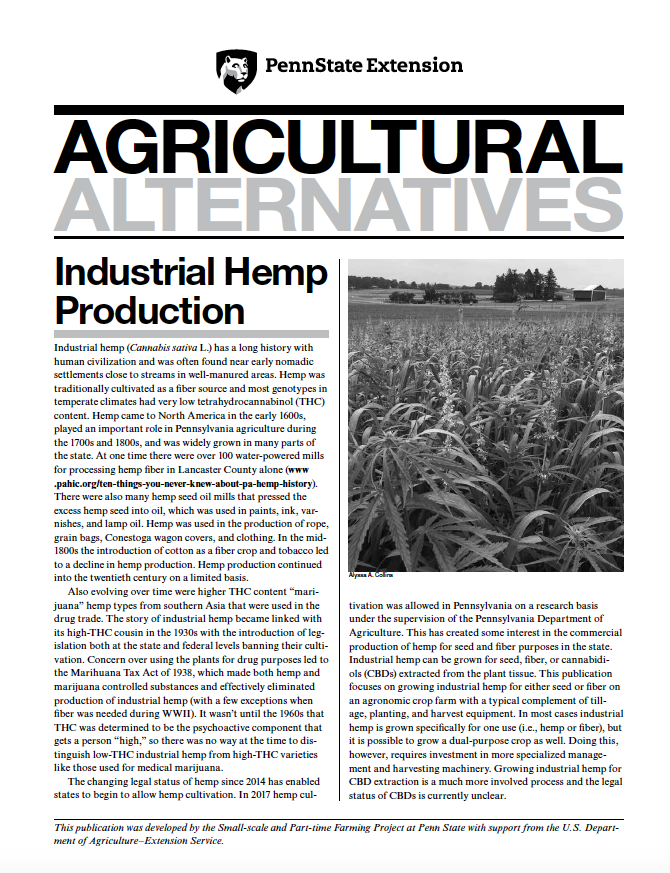
Exploring the potential of industrial hemp in Pennsylvania

A multi-disciplinary team of Penn State Extension staff, faculty and researchers, along with NERCRD staff, worked together to create a new publication on industrial hemp production that explores the production practices, economics, and policies around this crop.

Seeking feedback on economic analysis of Northeast states

In 2016, NERCRD Technical Advisory Committee Chair Paul Gottlieb launched a strategic planning effort on the Center’s behalf aimed at understanding the economic development issues that are especially important to the rural areas of the Northeast. Last month, he took this effort on the road, sharing his findings at the National Association of Community Development Extension Professionals (NACDEP) annual conference in order to garner feedback from state-based experts.

Investing in public education earns high marks for greater upward mobility

Investing in education may help boost economic opportunities for the next generation, according to a team of economists including Northeast Center Director Stephan Goetz.

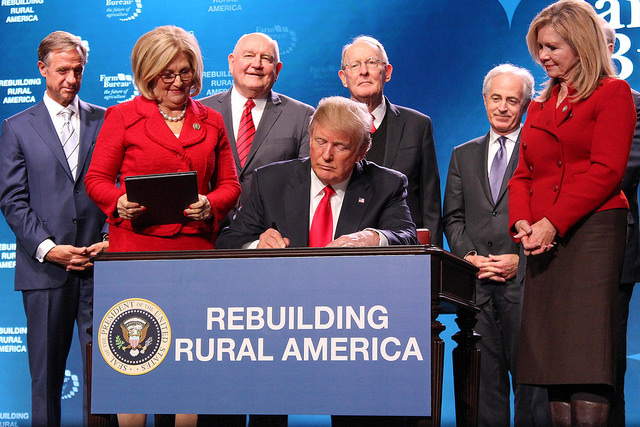
Donald Trump shown signing a document surrounded by onlookers.

Economic status of rural America in the President Trump era explored in newly published Center research

A paper titled “The Economic Status of Rural America in the President Trump Era and beyond” was published this month in a special issue of Applied Economic Perspectives and Policy and was authored by Center Director Stephan Goetz, Mark Partridge (Ohio State University), and Heather Stephens (West Virginia University). The special issue is a collection of papers around the theme “The Future of Agricultural and Applied Economics,” and is the culmination of the Agricultural and Applied Economics Association Agenda and Priorities initiative. The authors review the current economic conditions of rural America and the current literature, in order to set the stage for future research aimed at developing public policies that support economic prosperity in rural areas.

Weather patterns, farm income, other factors, may be influencing opioid crisis

The overprescribing of opioid-based painkillers may be the main driver of the increased abuse of opioids in rural America, but new research by Northeast Center Director Stephan Goetz and Meri Davlasheridze (Texas A&M) suggests that other factors, including declining farm income, extreme weather and other natural disasters, may affect a crisis that is killing thousands of citizens and costing the country billions of dollars.

New collection of papers explores Northeast U.S. food system, community engagement, and citizens’ perceptions of “regional foods”

For seven years a multidisciplinary team of more than 40 researchers led by the NERCRD has explored the extent to which a more robust regional food system in the Northeastern U.S. could improve food access in low-income communities and improve the long-term food security of the entire Northeast. Now, in an initial collection of three papers published in the Journal of Agriculture, Food Systems, and Community Development, team members have summarized some of their findings.