Archive for News

New study explores intersection of health insurance and national farm policy

A first-of-its-kind study looking at the intersection of health insurance and agriculture sheds light on a “Catch-22” situation that many farmers know all too well: while having health insurance is a critical risk-management strategy, the cost of health insurance and out-of-pocket health care costs can be burdensome to farm families and may limit investments in farm enterprises. The findings have important and timely policy implications, as lawmakers are debating both the 2018 Farm Bill and health insurance policy.

Center-led food systems project issues several research briefs

The Center’s signature food systems research project, Enhancing Food Security in the Northeast through Regional Food Systems (EFSNE), has issued several research briefs that serve to distill peer-reviewed journal articles authored by one or more project team members into 2-4 page documents intended for a general audience.

NERCRD funds three multi-state teams to advance regional collaboration and impact data collection

Three grant proposals have been selected to receive funding through the Northeast Center’s 2017-2018 “Impacts of Successful Extension and Outreach Programs” award program, which was designed to help Northeast Land-Grant University faculty and educators document the impacts of their work while also encouraging collaboration across state lines. Twenty-two people from nine states are participating in the projects. Selection of the funded projects was based on the recommendations of a review panel.

Rural innovation grant program culminates in special sessions at North American Meetings of the Regional Science Association

In 2016, with funding from the USDA Economic Research Service (ERS), the Northeast Center established an award program that provided three teams with access to a new data set that allowed them to explore ways in which business innovation is happening in rural areas, and its impact on rural communities and regional economies. Now that the program has ended, members from each of the funded teams presented their findings in two special sessions co-organized with ERS at the North American Meetings of the Regional Science Association.
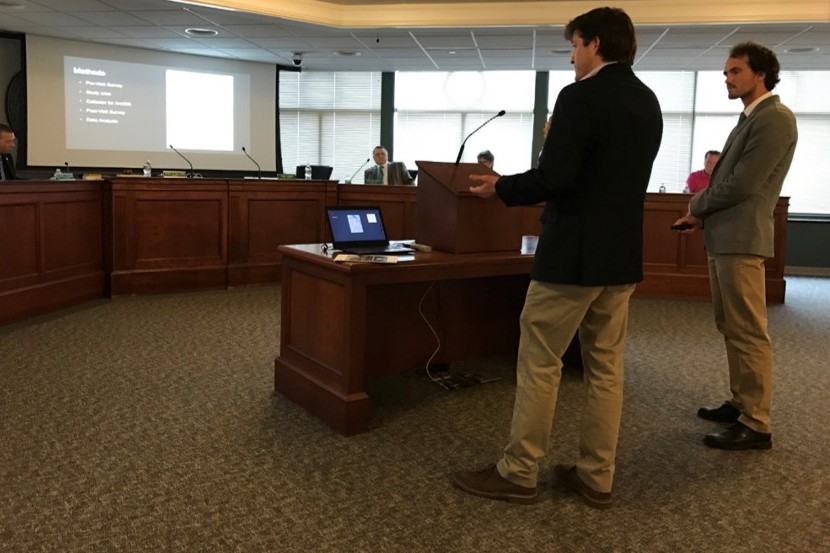
Two college students, wearing business suits, stand at a podium.

Engaging students in the First Impressions process at the University of New Hampshire

At this summer’s NACDEP meeting, University of New Hampshire (UNH) Extension’s Community and Economic Development Program Coordinator Casey Hancock described how she and her colleagues involved undergraduate student members of the UNH Planning Student Organization in First Impressions programming, which turned out to be a winning partnership.

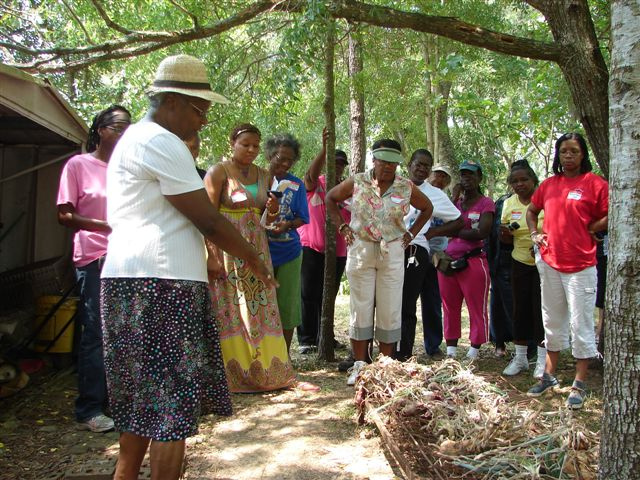
Group of farmers gathered around an agricultural demonstration plot.

Analyzing farmer networks is focus of new training manual

A new publication in the Northeast Center’s Rural Development Working Paper series provides guidance to Extension educators on analyzing existing farmer networks. Economic and social networks organized around local and regional food systems or value chains have the potential to increase traditionally underserved farmers’ access to the resources, skills and scale of logistical or distribution assets that are prerequisites for profitable expansion into urban markets.

Goetz named vice-chair of Council on Food, Agricultural and Resource Economics (C-FARE) Board of Directors

Stephan Goetz, the director of the Northeast Center, was named vice-chair of the Board of Directors of C-FARE earlier this month. Goetz has served on the Board since 2014, and on the organization’s Blue Ribbon Experts Panel since 2011.

Adding grads and going green can brighten economic outlook

Attracting college graduates and boosting natural amenities may give communities a double shot of economic growth potential, according to a new peer-reviewed study by economists at the Northeast Regional Center for Rural Development and California State University, Fresno.

Featured faculty: Matt Kaplan — seeing the silver lining in the “silver tsunami”

Communities throughout the region and the nation are bracing themselves for what some are calling the “silver tsunami” — the coming wave of baby boomers who will be entering old age. To Matt Kaplan — a professor of intergenerational programs and aging in the Department of Agricultural Economics, Education, and Sociology at Penn State — the “silver tsunami” can be a golden opportunity for communities.