The International Workshop on Agritourism (IWA) 2022 Conference Proceedings is intended to increase access to the scholarship that was shared during the three-day conference, which was hosted by University of Vermont Extension in Burlington, Vermont, USA, on August 30 – September 1, 2022. It contains 27 peer-reviewed papers. NERCRD staff provided editorial, project management, and graphic design support to this effort.
Authors: Edited by Lisa Chase, Chadley Hollas, Xinyi Qian, and Claire Whitehouse
Publication: Published jointly by the National Extension Tourism Network and the Global Agritourism Network, with support from the Northeast Regional Center for Rural DevelopmentDate Published: July 13, 2023
Published in 2023, these fact sheets provide comprehensive insights into the demographics of U.S. farms that offer agritourism activities or sell food directly to consumers or both. The fact sheets are available for all 50 states and are intended to help local decision makers, farmers, and the organizations that support them in their efforts to strengthen and expand agritourism enterprises.
Authors: Claudia Schmidt, Kacey Lo, Lisa Chase, Chadley Hollas, Jason Entsminger, Stacy Tomas, Stephan Goetz, Sarah Cornelisse
This 57-page publication is available here as a Flipping Book. It contains eight case studies that explore innovative Cooperative Extension and Sea Grant work in sustainable tourism and outdoor recreation. It features work being done in Georgia, Michigan, Minnesota, Oregon, South Carolina, Utah, Vermont, and West Virginia.
Agritourism is a critical farm diversification strategy for farmers to enhance income and profit potential with benefits related to rural community development, increased awareness of sustainability practices, and local heritage preservation. For rural community and economic development professionals, agritourism has become an important strategy to develop local tourism, grow small businesses, and enhance regional economic diversification. We propose that the agritourism ecosystem would arguably benefit from more robust Extension programming and network development. A discussion of two state case studies, Vermont and California, provides an overview of the critical elements necessary to build a statewide agritourism program. The role of Extension in rural development and tourism underscores the opportunity to utilize agritourism as a broader development strategy. Finally, we make recommendations for growing the role of Extension in agritourism. More robust training and education for Extension professionals, stronger connections to state tourism departments, and more robust advocacy with university and state-level decision makers on the value of agritourism investments are all highlighted as crucial next steps.
Authors: Claudia Schmidt, Lisa Chase, Carla Barbieri, Ellie Rilla, Doolarie Singh Knights, Dawn Thilmany, Stacy Tomas, Lori Dickes, Sarah Cornelisse, R. David Lamie, Rachael Callahan, Holly George, and Penny Leff
Publication: Applied Economics Teaching ResourcesDate Published: July 1, 2022
Americans in households with annual incomes from $50,000 to $75,000 experienced the sharpest increase in food insufficiency when the COVID-19 pandemic began – meaning that many people in the middle class didn’t have enough to eat at some point within the previous seven days, according to our peer-reviewed study that will soon be published in the Journal of Agricultural and Resource Economics.
Authors: Zheng Tian, Stephan J. Goetz
Publication: The ConversationDate Published: September 23, 2021
Pennsylvania is second in the nation when it comes to the amount of craft beer produced, and the number of breweries in Pennsylvania has increased steadily since 2010. Most of these engage in some form of beer tourism, and doing so can enhance local and regional tourism by offering brewery events on site, attending craft beverage/ale/local festivals, participating in craft beverage trails, and being part of brewery bus tours. These activities are often developed in collaboration with destination marketing organizations to attract more tourists to an area.
With funding from the Pennsylvania Liquor Control Board, a team of Penn State Extension researchers led by Claudia Schmidt conducted a study to gain a better understanding of these collaborations. They selected six beer trails across the commonwealth and interviewed their managers/administrators about how their trails began, gamification components (passports and memberships), the challenges they encountered and what recommendations they might have for others who would like to establish a trail in their county.
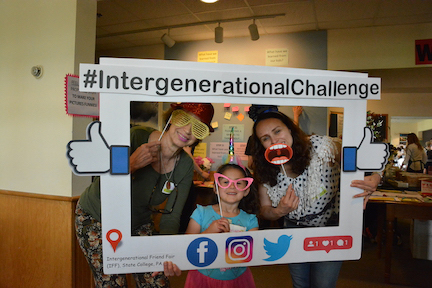
Intergenerational Friends Fairs (IFF) are fun, family-oriented, daylong events that engage community residents in a wide range of intergenerational activities, spanning the realms of art, storytelling, music, dance, and play. At the same time, these events provide local groups and organizations that conduct intergenerational programs with an additional platform for connecting with the public, establishing new partnerships, and garnering increased support for their programs.
The IFF model was first developed and piloted in June 2019, when Penn State University’s Intergenerational Leadership Institute (ILI) partnered with the State College Friends School to host the inaugural Intergenerational Friends Fair in State College, PA. The event featured interactive exhibits and activities planned by local organizations working to expand opportunities for intergenerational learning and living throughout the community. (See Acknowledgements to learn more about the ILL and the State College Friends School.)
In the following sections, we not only describe what takes place at one of the IFF events, but also the community organizing efforts occurring before and after the event. This is the key to increasing the potential for this approach to have a wider community impact, beyond providing event participants with a memorable single-day experience. IFF events are not only about “friends” and “fun; they also help to build community.
There are three stages to the Intergenerational Friends Fair model:
Event planning: 2-4 months
The event itself: 1 day
Post-event organizing and evaluation: 1 month
Intergenerational Friends Fair Objectives
Create a fun, family-oriented, community-connecting experience for local residents.
Provide participants with a better sense of how people across generations and cultures live and learn.
Expose participants to the intergenerational work being conducted and championed by local groups and organizations.
Create new opportunities for intergenerational communication, understanding and civic engagement in the local community.
Event Planning
Step 1: Organize an event coordination team
Planning a successful event will require the involvement of many people, particularly those who work with children, youth, and older adults, and have some experience running intergenerational programs. The first step is to establish an event coordination team. Members of this group will be responsible for recruiting participants, exhibitors, and presenters; publicizing the event; and coordinating and facilitating activities on the day of the event.
In pulling together an event planning team, reach out to a broad array of community professionals and volunteers who either run or otherwise support or promote intergenerational programs. Here are some examples of places to contact:
RSVP (Retired Senior Volunteer Program) and other senior volunteer organizations
Public and private schools
Organizations that provide services for older adults, including senior centers, AARP chapters, retiree organizations, lifelong learning organizations, retirement communities and senior housing facilities, and
Department of Parks and Recreation
Civic organizations such as block associations, local history groups, etc.
Environmental education centers
Youth organizations such as 4-H, YMCA/YWCA, and Big Brothers/Big Sisters
Family service/resource organizations and networks
Cooperative Extension offices
College/university-based service-learning clubs
Local libraries
Local development organizations
Cultural and arts institutions (museums, performing arts groups, botanical gardens, etc.)
Step 2: Determine event location and date
Location: The event should be held at an accessible park or in a large, spacious, indoor facility. Also, make sure to choose a location which provides some flexibility with regard to how the event space can be set up.
To accommodate and position each of the planned activity hubs, consider the following:
At the entry point to the Fair space:
Make sure that attendees can gain information about each of the exhibits and activities, their location, and, if needed, schedule of special events. Consider putting up a large map and/or distributing map handouts as a visual aid for attendees as they flow through the event space.
Set up a table with information about local programs, services, and resources that have an intergenerational component.
If taking photographs at the event (e.g., for publicity purpose), encourage attendees to sign photo permission forms upon entry.
For activities that require minimal distraction or disruption, position them in spaces that provide some sound and visual privacy. Make sure that upon entry, visitors can access a sign-up sheet for all activities. Include some sort of program note or color coding system to identify those activities that work best with no mid-activity entrants (for example, a session to prepare an intergenerational song, dance, or theatrical performance at the events closing ceremony).
Offer exhibitors the option of a site visit and set-up time on the previous day.
Choose a date:
that will give the event coordination team plenty of planning time
without too many major community events or happenings taking place
that allows those who work during the week to attend (like a Saturday morning).
Step 3: Recruit exhibitors and presenters and provide activity planning and set-up assistance
To identify local intergenerational program planners and practitioners to take part in the Fair, either as an exhibitors or presenters, begin by drawing upon the contacts and networks of members of the event coordination team (see Step #1 above). Other outreach efforts might include postings on local bulletin boards, notices in community organization newsletters, and presentations at meetings of community organizations.
As exhibitors and presenters are recruited, work with them to incorporate interactive components into their exhibit/activity stations so that Fair participants will get a chance to experience rather than just learn about the joys of intergenerational engagement.
That intergenerational XengagementX could take various forms. It might entail intensive discussion about issues of mutual interest, working on an arts and crafts project, a dance routine, yoga, a joint service project or some other medium of interaction and cooperation.
Keep in mind that one of the objectives of the IFF is to expose participants to intergenerational programs run by local groups and organizations. This way, the Fair can serve as a conduit for future intergenerational connections in the community. In addition to designing engaging, interactive activities for the Fair, local intergenerational practitioners should be encouraged to develop and distribute materials to pique resident interest and participation in their ongoing programs in the community.
Step 4: Publicize the Event
Use a variety of marketing tools to help cast a wide net to promote the event among the community’s younger and older populations. This includes distributing a press release to local media outlets, putting flyers and post cards up around town as well as online, and promoting the event via social media.
Calling the event an “Intergenerational Friends Fair” has the upside of conjuring up images of social mingling and family friendly activities. However, it doesn’t quite capture the community building significance of the event. This can be rectified in how the event is presented to the public.
For instance, in the event promotion materials, include “tag lines” such as:
Promoting an intergenerational way of living and learning.
We are better together.
Help make this a community for all ages.
In the press release for the event, select quotes can be obtained from event organizers and exhibitors to help generate community interest and excitement as well as a sense that this is a unique event. Here are some examples of such quotes used to promote the 2019 Fair in State College:
“By now, most people have heard the saying, ‘It takes a village to raise a child.’ Well, the Intergenerational Friends Fair will be all about ‘strengthening the intergenerational village.'”
“This event is a multimedia celebration of the bonds of caring and community that connect and enrich the lives of all generations.”
“Discover the treasure trove of history, expertise and creativity among older adults in our community…They have so much to offer, especially to young children, teens and young families.”
The Event
Fair organizers should aspire to create a wide range of intergenerational engagement opportunities. As an example, consider the breadth of interactive exhibits and activities created by local groups and organizations taking part in the State College, PA Fair in 2019. Glimpses of the planning process, event set-up, and activities in action can be viewed on the events video highlights reel.]
Games
Minute to Win It games (Grandfamilies Support GroupCentre County, PA)
Stump Your Relative game (Penn State Intergenerational Program)
Making and playing with button-string yoyos (Pasto Agricultural Museum)
Arts & Culture
Fiber arts:
Weaving bracelets (in the Ghanaian tradition) and displays of Kente Cloth and West African and American quilts (Weaving Wisdom, ILIState College, PA chapter)
Rope Walk: Winding fiber into jump ropes (Pasto Agricultural Museum)
Crafts, stories and international/ fair trade/ artisans exhibit (Ten Thousand Villages, State College, PA)
Theatre arts: Try Your Hand at Improv (Happy Valley Improv)
Sculpting with clay: The Turtle Way (Julian Woods/ School of Living)
Woodworking: Making kazoos out of wood (Doing Good With Wood)
Music and Dance:
Ecstatic Dance (Jonathan Bojan)
Drum Circle (Matt Price Enterprises)
Musical kazoo Jam-fest Closing ceremony (Eric Ian Farmer)
Health and Wellness
Intergenerational mindfulness and movement workshop (Juniper Village at Brookline)
Intergenerational obstacle course (Big Brothers/ Big Sisters Centre County Youth Service Bureau)
Yoga workshop (Jonathan Bojan)
Sparking family conversations about health (Penn State College of Nursing Center for Geriatric Nursing Excellence)
Literacy
Intergenerational Pen Pal program (RSVP Centre County)
Adult education and family literacy local programs and resources (Family Pathways, Goodling Institute for Research in Family Literacy)
Other
Intergenerational [polaroid] photo booths and reflective wall (ILI)
Volunteer matchmaking: Find your intergenerational volunteering niche (Volunteer Centre County)
Considerations when planning activities
Where possible, structure activities and events so that participants of different generations can communicate, cooperate, and learn from and with one another.
One example is an obstacle course, with a younger and older person paired for the grape race, kind of like an egg race, only using grapes instead.
Another example is a Drum Circle structured so that all participants get a chance to lead the group. This was the case for the one conducted at the State College, PA Fair. During a debriefing meeting following the event, a member of the planning team shared the following: “There was a collaborative mood, especially after [ ] got up to dance and others joined him. People gathered around the drum circle also took care of the children who were there. It was so powerful. Everybody made music together and everyone cared for one another. I think this type of activity is not very common but I think this is how life should be.”
For the closing/culminating activity: Should be high energy and have a group bonding element to it. Activities such as singing and dancing work well. The culminating activity for the State College, PA event was an intergenerational kazoo jam-fest led by a well-known local musician (Eric Ian Farmer).
Plan to have food at the event: Consider options for family-oriented, food-related activities such as hands-on cooking and nutrition education activities. Provide several options for snacks and meals at the event, such as a food truck near the entrance point.
Make it more than a fun fair: Remember that the Fair is meant to be more than a family-oriented fun event. It is also about building a cohesive community that welcomes and engages people of all ages. It is meant to be a starting point, a meeting place to increase community awareness, interest and involvement in local intergenerational programs and activities. Accordingly, event organizers need to be proactive in conveying community-building oriented messaging when lining up local media coverage of the event. Also, where possible, facilitate conversations among event planners, exhibitors and participants about possibilities for follow-up events and other intergenerational initiatives in the community.
Evaluating the Fair
Here are some strategies for assessing the planning process of an Intergenerational Fun Fair as well as its impact on event participants and the groups and organizations that help plan and run the event.
Before the event
Document all outreach efforts aimed at expanding the circle of event planners and presenters.
Keep minutes of event planning sessions.
Keep a record of responses to event publicity efforts (e.g., statements of interest from individuals, organizations, and members of the media).
During the event
Photo- and video-documentation: Consider asking a few members of the planning team to take photographs during the event, with special attention to scenes that capture the intergenerational dynamic
at the various exhibits and activity stations. If funds are available, hire a videographer and video editor to provide additional data on the communication dynamics among participating family members and between event participants and exhibitors/presenters throughout the event.
Junior journalists: At the State College, PA Fair, three high school-aged junior journalists who attended the event were enlisted to conduct short spot-interviews with Fair attendees. This service learning project provided the Fair planning team with additional feedback and perspectives with regard to how attendees viewed the Fair as a whole and the extent to which they were engaged at the activity stations.
After the event
Debriefing session: Shortly following the event, schedule a debriefing meeting with event planners, exhibitors, and activity facilitators. This is an ideal time to gain information on how the overall event and activity stations functioned, ways in which Fair attendees were engaged, how they benefited, unanticipated challenges that were encountered, and ways to improve the event the next time it is run. Debriefing sessions could also be formulated to obtain recommendations for follow-up intergenerational programs and activities in the community (see sidebar).
In writing up the results from the Fair
Outcomes from an Intergenerational Friends Fair event could be framed along the following three dimensions of impact:
Impact on Fair organizers, exhibitors, and activity facilitators (e.g., new knowledge, skills, or behaviors related to their intergenerational endeavors).
Impact on Fair visitors/participants (e.g., influence on intergenerational communication within families, increased awareness, and plans to take part in, local intergenerational and other community engagement activities, etc.).
Broader impact on the community (e.g., new programs, civic engagement opportunities, modified public spaces to accommodate intergenerational gatherings and activities, etc.).
Debriefing Prompts
Here are some questions to stimulate reflection and discussion about impact on the individuals/groups/organizations that helped plan and conduct the Fair:
Did you learn anything from Fair attendees: (a) to help you better understand local needs, assets, or initiatives? (b) that might be useful in informing your future efforts to develop new or revised intergenerational programs and activities? If yes, please describe.
Did you make any new (or renewed) contacts (either with fellow Fair planners and exhibitors, or with Fair attendees) that might: (a) yield new opportunities for: collaborating with other groups or organizations? (b) strengthen or extend your intergenerational program(s) or plans? If yes, please describe. Please describe any actions since the Fair that you might have taken to expand or otherwise modify your current intergenerational programs and activities.
Last Word
It is our hope that this how-to curriculum and the six-minute complementary resource/ companion video of highlights from the State College, PA Fair will provide readers with the information they need for planning and conducting Intergenerational Friends Fairs that match the needs, assets and interests of their own communities.
If you have any questions about the Intergenerational Friends Fair model, email Matt Kaplan.
Appendix
Tentative Budget Considerations
Tentative Budget (for starters):
Resources and materials for the exhibits (budgeted at $25-$50 per exhibit or activity)
Graphic arts/printing: for signage (including outdoor banners), event brochure, flyers, etc.
Video production: a communications team that can handle all videography and editing tasks, and rental equipment (if needed).
Equipment rental/set-up for outdoor stage/stage area, with sound system (for music/dance/performances), tent or awning (if needed to protect from rain or sun)
Refreshments: for pre-event meeting/set-up session with event exhibitors and presenters, and for the event itself
Stipends for workshop developers/presenters and student assistants to help with event planning, publicity, set-up, running activities, and post-event follow-up.
Publicity: ads in local media.
Acknowledgements
Fair Coordinators:
Matt Kaplan, Professor, Intergenerational Programs and Aging, and Director of the ILI (Intergenerational Leadership Institute) at Penn State University
Lori Pacchioli, Director of advancement for State College Friends School
Sponsors and supporters:
Intergenerational Leadership Institute (Penn State University), State College Friends School, Northeast Regional Center for Rural Development, Foxdale Village Retirement Community
Videography: Darcy Long, Videographer and video editor
Facilitator’s Guide production: Kristen Devlin (layout), Kyle Peck (editing)
The ILI is a certificate training program offered by Penn State University for older adults (55+) wishing to develop or expand intergenerational programs in their areas of interest. The ILI is co-sponsored by: the Centre County Office of Aging, OLLI (Osher Lifelong Learning Institute), Penn State Extension – Centre County, Penn State Center for Healthy Aging, the Penn State Office of Multicultural Affairs (College of Agricultural Sciences), and the Center for the Performing Arts at Penn State.
The State College Friends School is an independent pre-K through 8th grade school offering vigorous academics in a nurturing environment, where the Quaker testimonies of simplicity, peace, integrity, community, equality and stewardship are the foundation of curriculum and culture of the school.
This Facilitators Guide is part of the multi-media curriculum publication, which can be referenced as: Kaplan, M., Pacchioli, L., & Long, D. (2020). The Intergenerational Friends Fair: A strategy for deepening a communitys intergenerational footprint. Multimedia curriculum. Video footage is available online. University Park, PA: Penn State Intergenerational Program, Penn State University.
Authors: Matt Kaplan, Lori Pacchioli
Publication: Published by NERCRDDate Published: April 9, 2021
The economies of many counties and subregions in Appalachia have historically depended on a few dominant industries, such as mining or manufacturing. In recent years, Appalachian coal production has plummeted, resulting in devastating impacts on families, communities, counties, and states. It is critical to understand how coal-impacted communities can transform and diversify their economies and build resilience against future economic shocks.
Authors: Fritz Boettner, Evan Fedorko, Evan Hansen, Stephan J. Goetz, Yicheol Han, Christine Gyovai, Emily Carlson, Alexandria Sentilles
Publication: Appalachian Regional CommissionDate Published: February 1, 2019
Written by George Morse, Charles French, and Scott Chazdon, this document explores practical and credible methods for using the "but for" rule to document Extension Community Development Impacts.
Authors: George Morse, Charlie French, Scott Chazdon
Publication: Published by NERCRDDate Published: October 17, 2016